

Les voyages internationaux exigent une connectivité fiable, mais les frais d'itinérance traditionnels peuvent rapidement atteindre plusieurs centaines de dollars pour seulement quelques jours à l'étranger. Le concept de carte SIM de voyage a considérablement évolué au cours de la dernière décennie, passant des cartes physiques qu'il fallait remplacer manuellement à des solutions numériques sophistiquées qui s'activent instantanément. Aujourd'hui, les voyageurs bénéficient de la technologie des cartes SIM intégrées, qui élimine les difficultés liées à la recherche d'opérateurs locaux à l'arrivée, à l'attente dans les kiosques de l'aéroport ou à la gestion des blocages de téléphone incompatibles. Comprendre le fonctionnement des solutions modernes de cartes SIM de voyage permet aux grands voyageurs, aux professionnels en déplacement et aux nomades numériques de communiquer facilement au-delà des frontières sans dépasser leur budget.
Comprendre la technologie des cartes SIM de voyage
Une carte SIM de voyage désigne toute solution de connectivité mobile conçue spécifiquement pour une utilisation internationale, qu'elle soit physique ou numérique. Ces cartes SIM spécialisées se distinguent fondamentalement des forfaits domestiques classiques en offrant une couverture dans plusieurs pays grâce à des partenariats avec des opérateurs régionaux.
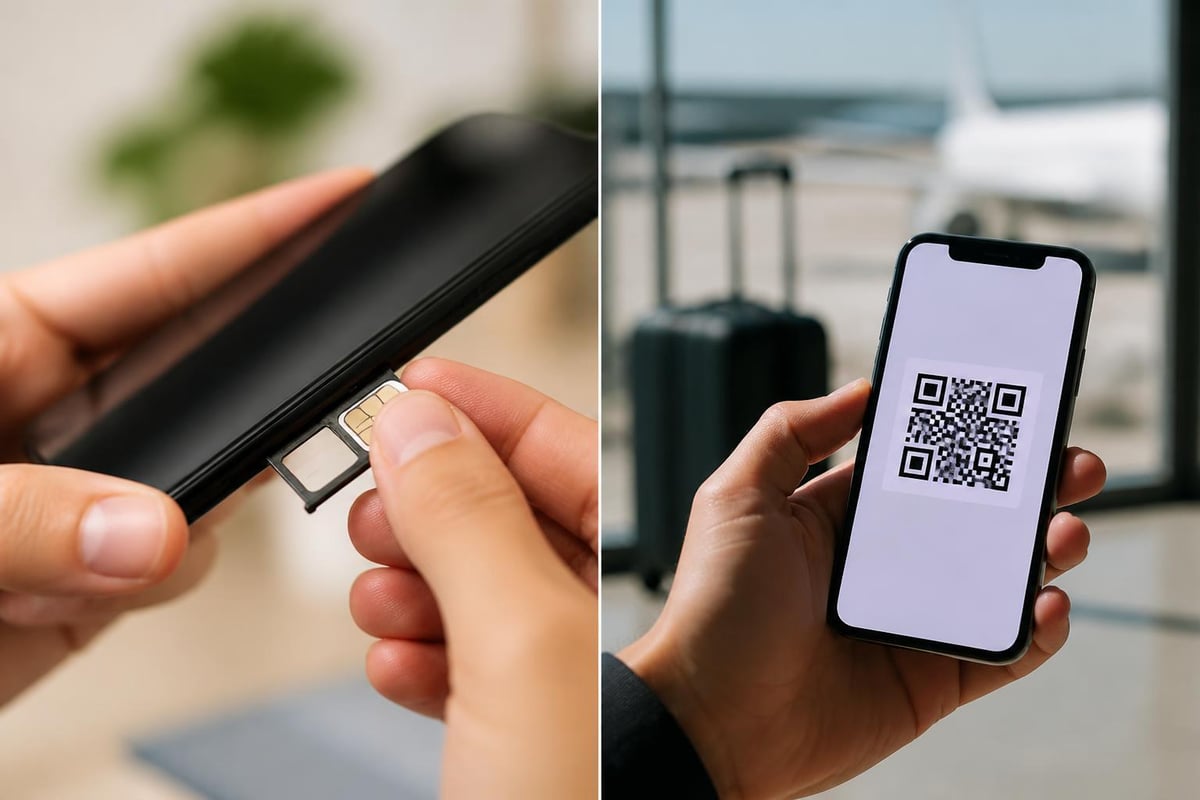
La carte SIM de voyage traditionnelle nécessitait l'achat d'une carte physique avant le départ ou à l'arrivée à destination. Les voyageurs devaient retirer physiquement leur carte SIM habituelle, risquant de perdre temporairement leur numéro principal et d'endommager la carte délicate lors du retrait.
L'évolution vers les solutions numériques
La technologie moderne des cartes SIM de voyage s'est orientée vers l'architecture eSIM (SIM intégrée), qui élimine entièrement les composants physiques. La spécification GSMA de provisionnement à distance M2M a établi des normes techniques permettant le provisionnement sécurisé et à distance des cartes SIM sur différents appareils.
Les principaux avantages des solutions de cartes SIM de voyage reposant sur l'eSIM comprennent :
- Activation instantanée, sans attendre la livraison physique
- Plus besoin de retirer votre carte SIM principale
- Possibilité de stocker plusieurs profils simultanément
- Réduction des déchets plastiques liés aux cartes SIM jetables
- Passage immédiat d'un opérateur ou d'une formule à l'autre
Cette évolution représente bien plus qu'un simple gain de commodité ; elle transforme fondamentalement la façon dont les voyageurs planifient leur connectivité. Plutôt que de rechercher des opérateurs locaux plusieurs semaines à l'avance, ils peuvent désormais acheter et activer une carte SIM de voyage quelques minutes avant l'embarquement.
Choisir la bonne formule de carte SIM de voyage
Choisir une carte SIM de voyage adaptée nécessite d'évaluer vos besoins spécifiques en matière de connectivité par rapport aux formules disponibles. Toutes les solutions SIM internationales n'offrent pas la même couverture, les mêmes volumes de données ou les mêmes modèles tarifaires.
Éléments à prendre en compte concernant la couverture
La couverture géographique est le principal critère de sélection pour toute SIM de voyage. Les forfaits pour un seul pays constituent l'option la plus économique pour les séjours prolongés dans un même endroit, tandis que les forfaits régionaux conviennent aux voyageurs qui explorent plusieurs pays voisins.
| Type de forfait | Idéal pour | Couverture typique | Fourchette de prix moyenne |
|---|---|---|---|
| Un seul pays | Voyages d'affaires prolongés | Un seul pays | 5 à 25 $ par semaine |
| Régional | Voyages dans plusieurs pays | Regroupements continentaux | 15 à 50 $ par voyage |
| Mondial | Voyageurs du monde | Plus de 100 pays | 25 à 100 $ et plus par mois |
| Données illimitées | Nomades numériques | Varie selon le fournisseur | 50 à 150 $ par mois |
Pour un voyage en Europe, un forfait eSIM de données spécifique à l'Allemagne peut suffire pour une conférence à Berlin, tandis qu'un forfait régional européen conviendra mieux à une personne visitant plusieurs capitales. Comprendre les détails de votre itinéraire permet d'éviter de payer pour des zones de couverture inutiles.
Besoins en volume de données
Évaluer sa consommation réelle de données permet d'éviter de payer trop cher pour des gigaoctets inutilisés et de subir une réduction de débit en cours de voyage. Tenez compte de ces habitudes d'utilisation typiques lors du choix d'une SIM de voyage :
Utilisateurs légers (1 à 3 Go par semaine) : consultation des e-mails, applications de messagerie, navigation occasionnelle, consultation minimale des réseaux sociaux
Utilisateurs modérés (5 à 10 Go par semaine) : réseaux sociaux utilisés régulièrement, navigation fréquente, appels vidéo, streaming occasionnel
Utilisateurs intensifs (15 Go et plus par semaine) : streaming constant, synchronisation du stockage cloud, visioconférences, téléversement de contenus
De nombreux voyageurs surestiment largement leurs besoins réels en données. Selon les conseils sur l'utilisation des cartes SIM internationales, la plupart des touristes consomment entre 2 et 5 Go par semaine, même avec une utilisation régulière de leur smartphone, principalement parce que l'accès au Wi-Fi dans les hébergements et les cafés complète les données mobiles.
Processus d'installation et d'activation
L'activation d'une SIM de voyage varie considérablement entre les cartes physiques et les solutions eSIM. Comprendre le processus d'installation avant le départ permet d'éviter les problèmes de connectivité à l'arrivée.
Installation d'une carte SIM physique
Les cartes SIM de voyage traditionnelles nécessitent une installation manuelle, qui comprend généralement les étapes suivantes :
- Éteignez complètement votre appareil
- Repérez le plateau SIM à l'aide de l'outil d'éjection
- Retirez votre carte SIM actuelle (rangez-la en lieu sûr)
- Insérez la nouvelle carte SIM de voyage dans le bon sens
- Allumez l'appareil et attendez l'enregistrement sur le réseau
- Configurez les paramètres APN si nécessaire
- Activez-la via le site web de l'opérateur ou par téléphone
Le processus présente plusieurs points de défaillance, allant de la perte de l'outil d'éjection aux plateaux SIM endommagés. Les cartes physiques nécessitent également une planification à l'avance, car les délais de livraison peuvent atteindre 5 à 10 jours ouvrés pour les expéditions internationales.
Activation numérique de l’eSIM
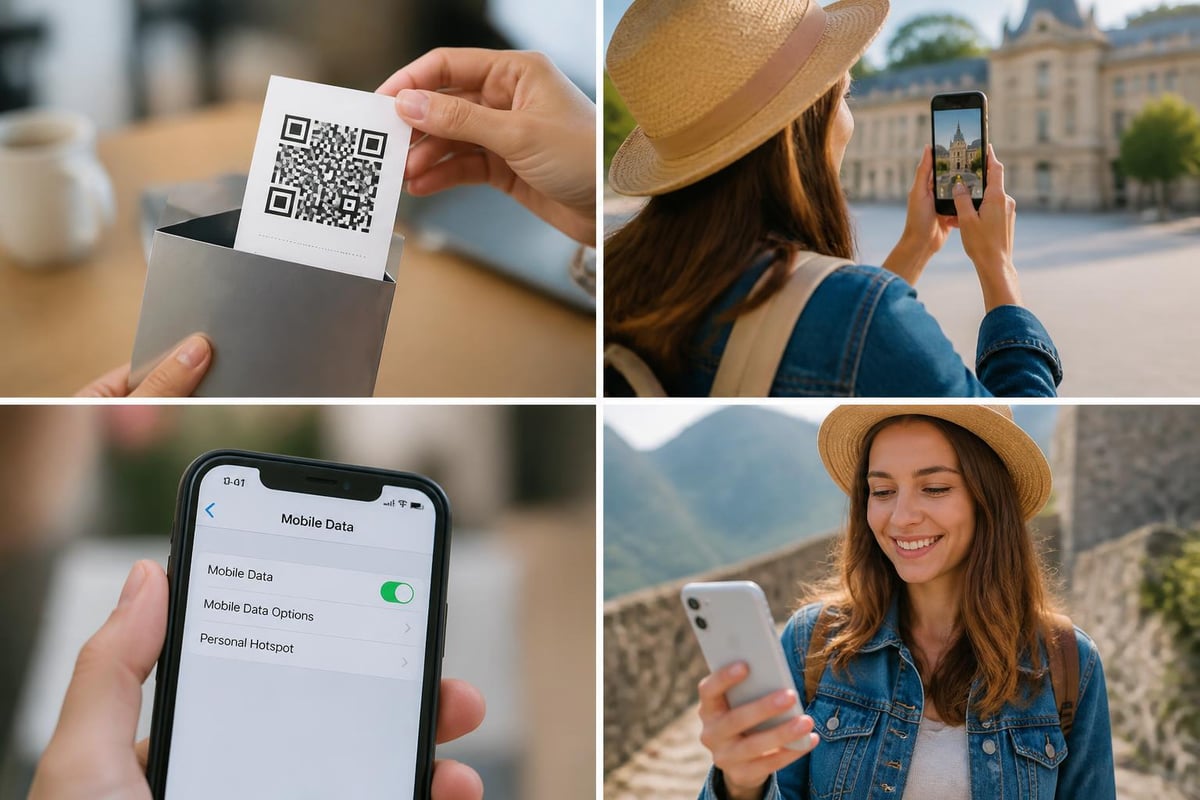
L’activation numérique d’une carte SIM pour voyageurs simplifie l’ensemble du processus grâce à une configuration logicielle. L’installation suit cette séquence simplifiée :
- Vérifiez la compatibilité de l’appareil à l’aide des spécifications du fabricant
- Achetez un forfait eSIM et recevez le code QR par e-mail
- Accédez aux réglages de l’appareil et sélectionnez « Ajouter un forfait cellulaire »
- Scannez le code QR fourni avec votre appareil photo
- Confirmez l’installation et attribuez un nom au nouveau profil
- Activez la carte SIM pour voyageurs lorsque vous êtes prêt à l’utiliser
La compatibilité de l’appareil reste essentielle, car la prise en charge de l’eSIM nécessite des composants matériels spécifiques. La plupart des smartphones haut de gamme fabriqués après 2018 prennent en charge l’eSIM, mais la vérification de votre modèle précis évite les complications lors de l’achat.
Comparaison des coûts et établissement du budget
Les considérations financières influencent fortement le choix d’une carte SIM pour voyageurs, en particulier pour les voyageurs internationaux fréquents ou les longs séjours. Comprendre le coût réel nécessite d’examiner plusieurs facteurs tarifaires au-delà du prix affiché.
Coûts cachés à prendre en compte
De nombreuses cartes SIM pour voyageurs affichent des prix de base attractifs tout en masquant des frais supplémentaires. Une analyse complète des coûts doit prendre en compte les éléments suivants :
- Frais d’activation : frais uniques compris entre 3 et 10 $
- Frais de recharge : tarifs majorés pour l’achat de données supplémentaires pendant le voyage
- Périodes de validité : expiration ou non des données inutilisées après 7, 14 ou 30 jours
- Limitation de débit : réduction de la bande passante après avoir atteint certains seuils
- Service client : assistance nécessitant ou non des appels internationaux surtaxés
Comparer le coût total de possession plutôt que le simple prix des données au gigaoctet permet de déterminer l’option de carte SIM pour voyageurs la plus économique selon votre situation.
Variations régionales des prix
Le prix des cartes SIM pour voyageurs varie considérablement selon la destination, en raison de la réglementation, des coûts d’infrastructure et de la concurrence entre opérateurs. Le même fournisseur peut facturer 15 $ pour 5 Go dans les pays européens, mais 35 $ pour une couverture identique sur les marchés asiatiques.
Une étude comparative des cartes SIM pour voyageurs montre que la connectivité aux États-Unis coûte généralement 40 à 60 % plus cher que les équivalents européens pour des volumes de données similaires. Prévoyez votre budget en fonction de vos destinations.
Exigences de compatibilité des appareils
Tous les smartphones ne prennent pas en charge toutes les solutions de carte SIM pour voyageurs, ce qui rend la vérification de la compatibilité essentielle avant l’achat. Les capacités matérielles et les configurations logicielles déterminent si votre appareil peut utiliser une option de connectivité donnée.
Spécifications matérielles
Les cartes SIM de voyage physiques nécessitent uniquement un tiroir SIM standard compatible avec la taille de la carte (généralement une nano-SIM pour les appareils modernes). En revanche, les solutions basées sur l'eSIM nécessitent des composants spécifiques du jeu de puces permettant le provisionnement à distance.
Les exigences matérielles essentielles pour une eSIM comprennent :
- Jeu de puces Universal Integrated Circuit Card (eUICC) intégré
- Élément sécurisé pour le chiffrement et l'authentification
- Capacité de provisionnement SIM à distance
- Modem cellulaire compatible
La plupart des iPhone à partir des générations XS/XR prennent en charge la fonctionnalité eSIM, comme indiqué dans les recommandations de compatibilité iOS. La prise en charge d'Android varie davantage selon les fabricants, les modèles phares récents de Samsung, Google Pixel et Huawei intégrant généralement les composants nécessaires. Vérifier la compatibilité de l'appareil Android permet d'éviter d'acheter une SIM de voyage incompatible.
Points à prendre en compte concernant le verrouillage opérateur
Les verrous opérateur des appareils empêchent l'utilisation de cartes SIM alternatives, y compris les options de SIM de voyage, même si le matériel les prend en charge. Contactez votre opérateur d'origine pour vérifier l'état du verrouillage et demander le déverrouillage si nécessaire. Celui-ci nécessite généralement que le compte soit en règle et que le contrat soit arrivé à son terme.
Les délais de déverrouillage varient de l'immédiat (pour les appareils éligibles) à 48 heures, le temps que l'opérateur effectue les vérifications nécessaires. Anticipez afin de vous assurer que votre appareil accepte la SIM de voyage avant votre départ.
Performances et vitesse du réseau
La vitesse de connexion a une incidence importante sur l'utilité pratique de toute SIM de voyage, mais les spécifications annoncées reflètent rarement les performances réelles. Comprendre comment la priorisation du réseau et les normes technologiques influencent votre expérience permet de définir des attentes réalistes.
Comprendre les niveaux de priorité du réseau
Les opérateurs attribuent généralement aux utilisateurs de SIM de voyage des niveaux de priorité inférieurs à ceux des abonnés domestiques. En cas de congestion du réseau, les clients domestiques bénéficient d'une bande passante prioritaire, ce qui peut entraîner des vitesses plus faibles ou des difficultés de connexion pour les utilisateurs internationaux de SIM.
| Niveau de priorité | Type d'utilisateur | Impact en cas de congestion |
|---|---|---|
| Niveau 1 | Abonnés domestiques premium | Aucun bridage |
| Niveau 2 | Abonnés domestiques standard | Ralentissement minimal |
| Niveau 3 | Partenaires d'itinérance | Bridage modéré |
| Niveau 4 | SIM de voyage d'un fournisseur tiers | Ralentissement important possible |
Cette hiérarchie explique pourquoi des cartes de couverture identiques produisent des expériences variables. Une SIM de voyage peut techniquement accéder aux mêmes antennes que les utilisateurs locaux, mais bénéficier d'une allocation de bande passante réduite.
Accès à la 4G LTE par rapport à la 5G
De nombreux forfaits SIM de voyage annoncent une connectivité 4G LTE, mais l'accès à la 5G reste limité pour les utilisateurs internationaux. Même dans les pays compatibles avec la 5G, les accords d'itinérance limitent souvent les utilisateurs de SIM de voyage aux réseaux 4G, quelle que soit la compatibilité de leur appareil.
L’impact réel dépend des habitudes d’utilisation. La navigation classique, la navigation GPS et la messagerie fonctionnent de manière identique sur les réseaux 4G, tandis que les avantages de la 5G concernent principalement le téléchargement de fichiers volumineux, le streaming en 4K et la visioconférence.
Gestion de plusieurs profils et fonctionnalité double SIM
Les smartphones modernes prennent de plus en plus en charge plusieurs profils SIM simultanément, que ce soit via deux emplacements physiques ou la technologie eSIM. Cette fonctionnalité permet de conserver votre numéro principal actif tout en utilisant une SIM de voyage pour la connectivité des données.
Stratégies de configuration double SIM
Une configuration double SIM optimale sépare les fonctions vocales et de données entre les profils, évitant ainsi les frais d’itinérance imprévus tout en maintenant l’accessibilité de votre numéro principal. Configurez votre appareil pour acheminer les appels et les SMS via votre opérateur habituel, tout en dirigeant l’ensemble du trafic de données via la SIM de voyage.
Les paramètres double SIM recommandés comprennent :
- SIM principale : appels vocaux et SMS uniquement, données désactivées
- SIM de voyage : données uniquement, ou données avec un numéro d’appel secondaire
- Ligne par défaut pour les données : définissez toujours la SIM de voyage
- Appels Wi-Fi : activez-les sur la SIM principale lorsque cette option est disponible
Cette configuration permet de recevoir des appels sur votre numéro habituel (souvent gratuitement pour les appels entrants en itinérance) tout en évitant les frais élevés d’itinérance des données, en utilisant exclusivement la SIM de voyage pour la connexion Internet.
Changement et gestion des profils
La gestion de plusieurs profils eSIM nécessite de comprendre comment les activer, les désactiver et les supprimer au fil de l’évolution de vos besoins de voyage. La plupart des appareils limitent le nombre de profils actifs à un ou deux simultanément, mais peuvent en stocker 5-10 pour une activation ultérieure.
La gestion régulière des profils évite toute confusion quant à la SIM de voyage actuellement active et vous permet de ne pas utiliser accidentellement les données d’un profil d’itinérance coûteux lorsqu’une option locale économique est disponible.
Résolution des problèmes de connectivité courants
Même les solutions SIM de voyage correctement configurées peuvent parfois rencontrer des problèmes de connexion. Reconnaître les problèmes courants et leurs solutions réduit les interruptions lors des moments importants d’un voyage.
Échecs d’enregistrement sur le réseau
Si votre SIM de voyage ne parvient pas à se connecter après l’installation, le problème provient généralement de l’une de plusieurs causes :
- Paramètres APN incorrects : Vérifiez que la configuration du point d’accès aux données correspond aux spécifications du fournisseur
- Sélection du réseau : Sélectionnez manuellement l’opérateur si la détection automatique échoue
- Délai d’activation : Certaines eSIM nécessitent 2-4 heures pour la mise en service sur le réseau
- Lacunes de couverture : Vérifiez que votre emplacement se trouve dans la zone de couverture du forfait
- Statut du compte : Vérifiez que le paiement a été traité et que le forfait reste actif
La FAQ eSIM répond à la plupart des difficultés techniques rencontrées lors de l’activation et de l’utilisation. Un dépannage systématique, commençant par le redémarrage de l’appareil et se poursuivant par la vérification des paramètres, résout environ 85 % des problèmes de connectivité.
Problèmes de débit et de performances
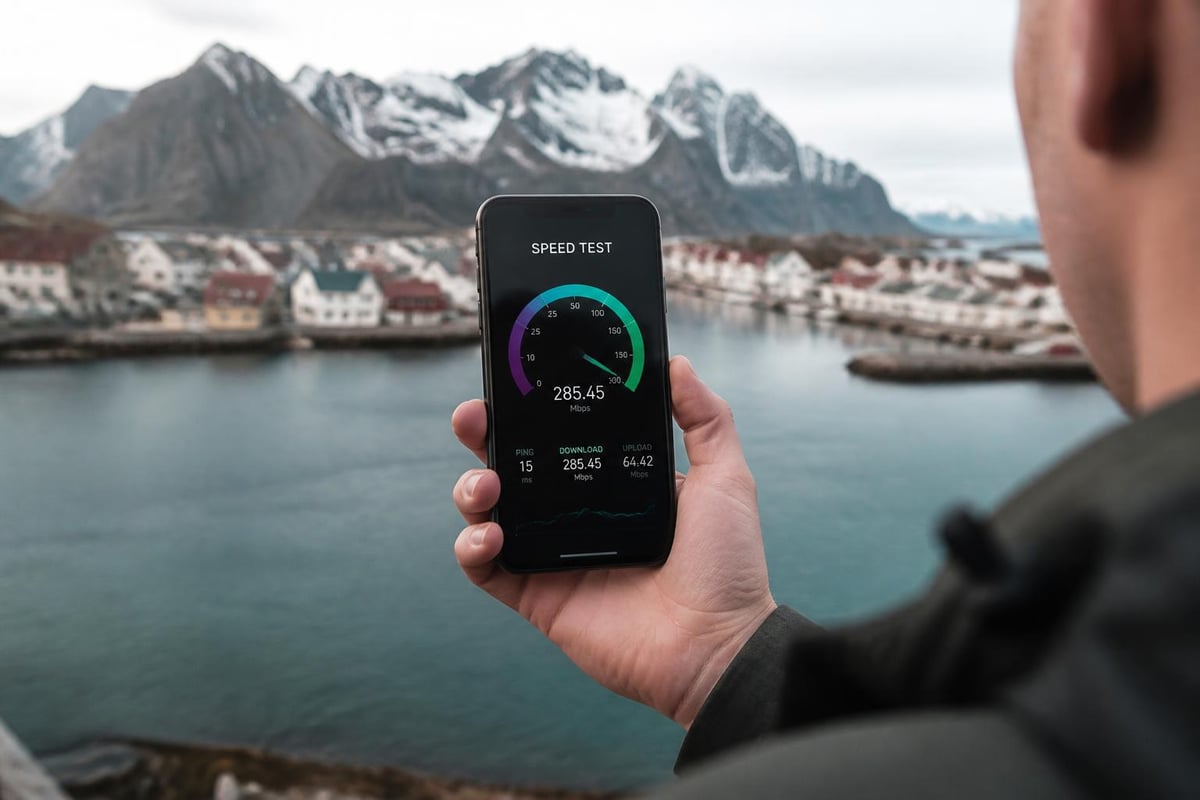
Les débits plus lents que prévu avec votre carte SIM de voyage résultent souvent de la congestion du réseau, des politiques de limitation du débit ou de l’approche de la limite de données, plutôt que de dysfonctionnements techniques. Envisagez les étapes de diagnostic suivantes :
- Tester le débit avec plusieurs serveurs et à différents moments de la journée
- Vérifier que le volume de données restant n’a pas déclenché une limitation du débit
- Vérifier les notifications de l’opérateur concernant la maintenance du réseau
- Vérifier que l’appareil ne télécharge pas de mises à jour volumineuses en arrière-plan
- Comparer les performances dans différents endroits
Les problèmes de débit persistants justifient un contact avec l’assistance du fournisseur, car ils peuvent indiquer des problèmes de configuration du compte ou des perturbations des partenariats réseau nécessitant une résolution du côté de l’opérateur.
Considérations de sécurité pour la connectivité internationale
L’utilisation de toute carte SIM de voyage implique des considérations de sécurité particulières, distinctes de celles liées à l’utilisation d’un réseau mobile national. Comprendre les vulnérabilités potentielles et mettre en œuvre des mesures de protection permet de sécuriser vos informations personnelles et vos comptes à l’étranger.
Protocoles de sécurité réseau
Les réseaux mobiles publics, même lorsqu’ils sont accessibles par l’intermédiaire de fournisseurs légitimes de cartes SIM de voyage, présentent davantage de risques de sécurité que les réseaux domestiques de confiance. Mettez en œuvre les mesures de protection suivantes :
Les pratiques de sécurité essentielles comprennent :
- Activer le VPN avant d’accéder à des comptes sensibles ou à des services financiers
- Éviter autant que possible les réseaux Wi-Fi publics pour les opérations bancaires ou l’authentification
- Utiliser des applications d’authentification à deux facteurs plutôt que la vérification par SMS
- Surveiller l’activité du compte afin de détecter les tentatives d’accès non autorisées
- Désactiver la connexion automatique aux opérateurs inconnus
La commodité d’une connectivité instantanée grâce à une carte SIM de voyage ne doit pas compromettre la sécurité de vos données. Les services VPN de qualité professionnelle chiffrent le trafic entre votre appareil et les serveurs de destination, empêchant les interceptions, même sur des réseaux potentiellement compromis.
Protection contre l’échange de carte SIM et des comptes
L’utilisation d’une carte SIM de voyage crée des vulnérabilités supplémentaires face aux attaques par échange de carte SIM, lors desquelles des criminels transfèrent votre numéro vers une autre carte pour intercepter les codes d’authentification. Protégez vos comptes principaux en :
- Activer la protection contre le changement de carte SIM au niveau de l’opérateur, avec vérification en personne obligatoire
- Utiliser des applications d’authentification plutôt que les SMS pour les services essentiels
- Surveiller le numéro principal afin de détecter toute interruption de service inattendue
- Utiliser une adresse e-mail distincte pour les services liés aux voyages
- Documenter tous les achats de cartes SIM de voyage et leurs dates d’activation
Ces précautions empêchent les solutions de connectivité en voyage de créer involontairement des failles de sécurité dans votre vie numérique.
Surveillance et gestion de l’utilisation des données
Gérer efficacement la consommation permet d’éviter les dépassements inattendus et de garantir que les données de votre SIM pour voyageurs durent pendant tout votre voyage. La mise en place de stratégies de suivi et de contrôles de l’utilisation maintient la connectivité sans mauvaise surprise pour le budget.
Outils de suivi intégrés
La plupart des smartphones modernes intègrent des outils natifs de suivi des données qui enregistrent la consommation par application, période et réseau. Configurez ces outils avant le départ :
- Réinitialiser les statistiques au début du voyage pour assurer un suivi précis
- Définir des seuils d’alerte de données à 75 % du volume du forfait
- Activer des limites strictes de données à 90 % pour éviter les dépassements
- Vérifier la consommation chaque jour pendant les premiers jours du voyage
- Identifier et limiter les applications consommant beaucoup de données en arrière-plan
Consulter votre solde via les portails ou applications des fournisseurs complète le suivi effectué au niveau de l’appareil grâce à des informations de compte en temps réel, notamment les dates d’expiration et les périodes de validité restantes.
Stratégies d’optimisation
Prolonger les données d’une SIM pour voyageurs nécessite des habitudes d’utilisation stratégiques qui réduisent la consommation sans nuire significativement aux fonctionnalités :
| Action | Données économisées | Impact sur l’expérience |
|---|---|---|
| Désactiver la lecture automatique des vidéos | 30-50% | Minimal |
| Réduire la qualité du streaming | 40-60% | Modéré |
| Télécharger les cartes hors ligne | 15-25% | Aucun |
| Limiter l’actualisation des applications en arrière-plan | 20-30% | Minimal |
| Utiliser le Wi-Fi pour les mises à jour | 25-40% | Aucun |
Télécharger des contenus de divertissement, des cartes et des documents de voyage en Wi-Fi avant de quitter votre hébergement réduit considérablement la consommation de données mobiles pendant les trajets et les visites.
Comparaison des fournisseurs de SIM pour voyageurs
Le marché des SIM pour voyageurs compte des dizaines de fournisseurs proposant différents niveaux de couverture, de tarification et de qualité de service. Une comparaison systématique selon des critères clés permet d’identifier la solution optimale pour vos besoins spécifiques.
Cadre des critères d’évaluation
Évaluez les fournisseurs de SIM pour voyageurs potentiels à l’aide de ces facteurs pondérés :
Couverture et fiabilité (35 %) : nombre de pays pris en charge, partenariats avec des opérateurs, avis des utilisateurs concernant la qualité de la connectivité
Transparence des tarifs (25 %) : tarifs de données clairs, absence de frais cachés, coût par gigaoctet compétitif, tailles de forfait flexibles
Simplicité d’activation (20 %) : complexité du processus d’installation, délai entre l’achat et l’activation du service, qualité des instructions de configuration
Assistance clientèle (15 %) : horaires de disponibilité, délais de réponse, langues prises en charge, efficacité de la résolution des problèmes
Fonctionnalités supplémentaires (5 %) : options d’appel vocal, prise en charge des SMS, autorisation du partage de connexion, options de prolongation de la validité
Selon les évaluations complètes des services eSIM, les fournisseurs haut de gamme se distinguent par des partenariats réseau supérieurs, qui garantissent des performances constantes plutôt que par leurs prix simplement les plus bas.
Spécialistes régionaux contre fournisseurs mondiaux
Le choix entre des spécialistes régionaux des SIM pour voyageurs et des fournisseurs mondiaux dépend des habitudes de voyage. Les visiteurs fréquents de certains continents bénéficient d’une expertise régionale et de partenariats optimisés avec les opérateurs, tandis que les voyageurs du monde entier privilégient une gestion de compte unifiée pour des destinations variées.
Les fournisseurs régionaux négocient souvent de meilleurs tarifs et un accès prioritaire au réseau dans leurs zones de prédilection, ce qui se traduit par de meilleures performances réelles malgré des coûts nominaux potentiellement plus élevés.
Évolutions futures de la technologie des SIM pour voyageurs
Le secteur des SIM pour voyageurs continue d’évoluer rapidement, les technologies émergentes promettant davantage de commodité, une couverture étendue et des tarifs améliorés. Comprendre les évolutions à venir aide les voyageurs à anticiper des options plus avantageuses.
Extension de l’itinérance 5G mondiale
L’itinérance 5G reste actuellement limitée, mais l’extension des accords internationaux élargira progressivement l’accès au haut débit pour les utilisateurs de SIM pour voyageurs tout au long de 2026 et au-delà. Cette évolution profitera particulièrement aux voyageurs d’affaires ayant besoin de visioconférences fiables et de transferts de fichiers volumineux à l’étranger.
Les améliorations attendues de l’itinérance 5G comprennent :
- Des accords de partenariat plus étendus avec les opérateurs, permettant l’accès à la 5G
- Une latence réduite pour les applications en temps réel et les jeux vidéo
- Des volumes de données plus élevés pour les utilisateurs de SIM pour voyageurs
- Des tarifs plus compétitifs à mesure que les coûts d’infrastructure diminuent
Le calendrier varie considérablement selon les régions, les marchés européens et asiatiques devançant l’Amérique du Nord et les autres territoires.
Identité et activation basées sur la blockchain
Les applications émergentes de la blockchain promettent une activation plus sûre et instantanée des SIM pour voyageurs, en créant des justificatifs d’identité numériques vérifiables qui facilitent l’intégration auprès des opérateurs. Cette technologie pourrait éliminer les délais d’activation actuels et réduire les risques de fraude.
Les premiers essais montrent des temps d’activation mesurés en secondes plutôt qu’en minutes ou en heures, ce qui pourrait permettre aux voyageurs de changer d’opérateur en cours de voyage en fonction des performances et des tarifs en temps réel.
Les solutions SIM modernes pour les voyageurs ont transformé la connectivité internationale, autrefois complexe et coûteuse, en un processus simple et abordable. En comprenant les options technologiques, en évaluant les besoins en matière de couverture et en mettant en place des mesures de sécurité appropriées, les voyageurs peuvent maintenir une communication fluide au-delà des frontières, sans coûts ni complications excessifs. Que vous planifiiez des vacances en Europe, un voyage d’affaires en Asie ou une aventure sur plusieurs continents, ESimAllo propose des forfaits de données eSIM à activation instantanée dans de nombreux pays et régions, éliminant les contraintes liées aux cartes SIM physiques tout en vous permettant de rester connecté partout dans le monde grâce à une tarification flexible et transparente ainsi qu’à des partenariats réseau fiables.
Article rédigé avec RankPill.